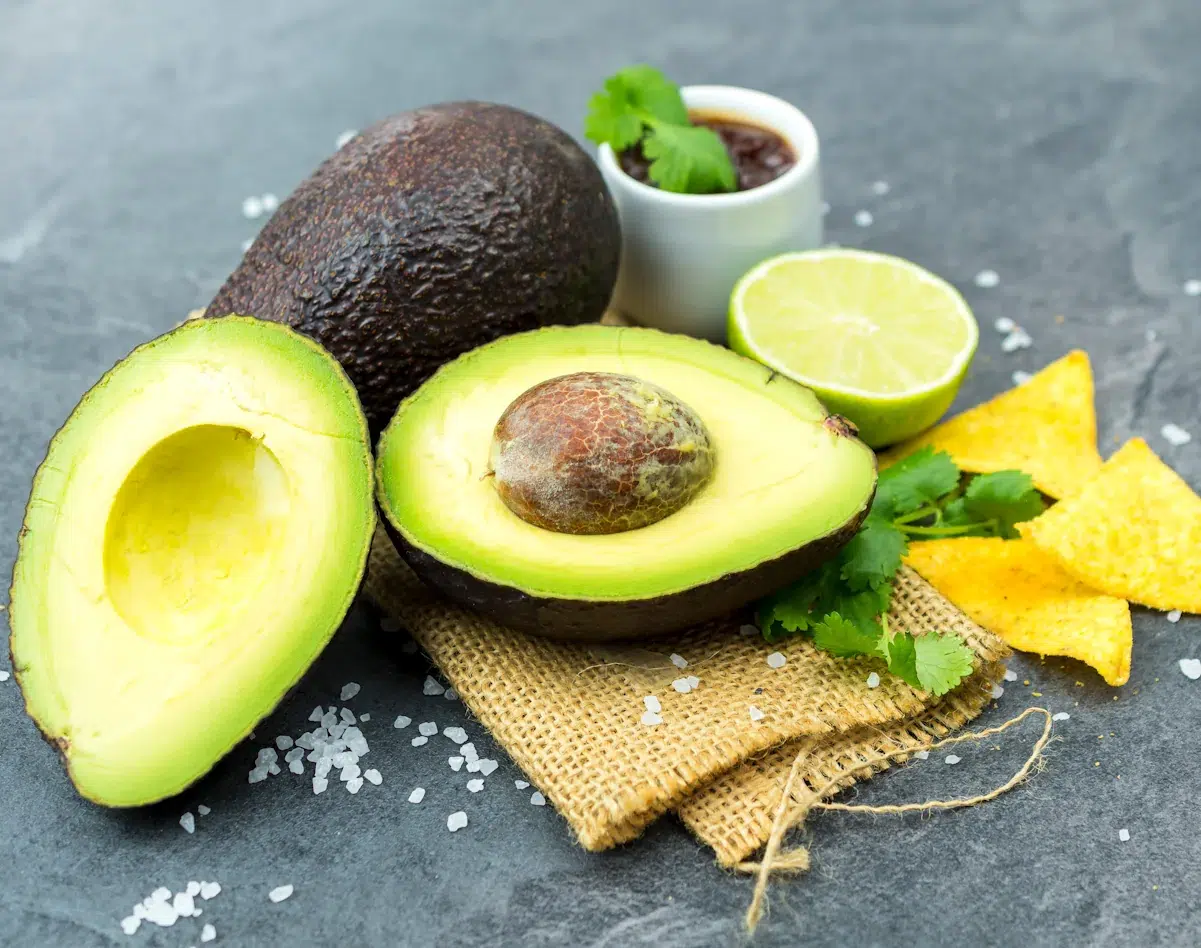
Few fruits have enjoyed quite such a meteoric rise in recent years as the avocado. It ends up on breakfast toast, in bowls and salads, and on the table as guacamole whenever friends come round. For anyone eating plant-based, it’s almost like the butter of the fruit aisle: creamy, mildly nutty and completely free from animal fat. At the same time, it has a reputation for being a bit of an environmental villain. There’s some truth in both, which is exactly why we’re taking an honest look at the avocado from both sides.
Origin
The avocado originally comes from Central America. [1] The Aztecs already prized the fruit and the oil made from it, and botanically the avocado tree belongs to the laurel family. [2] Today it grows wherever it’s warm enough. On our supermarket shelves you’ll mainly find fruit from Peru, alongside Colombia, Chile, South Africa, Kenya, Israel and a small share from Spain. [3]
The figures show just how popular the avocado has become. In 2023, around 14,400 tonnes were imported into Austria, which works out at a good one and a half kilos per person. [4] In Germany, imports more than quintupled within ten years, reaching almost 157,800 tonnes in 2023. [5]
Nutrients and benefits
The avocado is the fattiest fruit you’ll find in the fruit aisle: around 15 per cent of its flesh is fat. [1] That sounds like a lot at first, but it’s actually its big selling point, because most of it is monounsaturated fat, the same kind you know from olive oil. [3, 6]
Even a third of a medium-sized avocado (about 50 grams) has plenty to offer: [6]
- Fibre: around 3.4 grams, which keeps you full and does your gut good
- Potassium: about 254 milligrams, important for your muscles, nerves and blood pressure
- Folate, vitamin K and pantothenic acid: roughly a tenth of your daily requirement of each
- Copper: a trace element your body needs for things like forming blood cells
- Energy: roughly 80 kilocalories
So what does that do for your body? Eating avocado regularly can lower your LDL cholesterol, the ‘bad’ cholesterol, as well as your upper blood pressure reading a little. [7] People who reach for avocados often also tend to eat a more balanced diet overall. [6]
There’s one point where I want to be honest, though: the avocado is often marketed as a slimming food, and it doesn’t live up to that. It has no measurable effect on weight, BMI or blood sugar. [7] On top of that, most of the research comes from North and Latin America, and a large share of it was co-funded by the avocado industry. [6] So the avocado is a genuinely valuable food, but it isn’t a miracle cure.
“
The path to health leads through the kitchen, not through the pharmacy.
Sebastian Kneipp
Buying
You can buy avocados all year round, and depending on the variety the skin ranges from light green to almost black. That’s why colour alone tells you very little about ripeness. Trust your thumb instead: if the fruit gives slightly when you press it gently, it’s ready to eat.
A few tips that have worked well for me:
- Buy them firm: Hard avocados ripen nicely at home. It’s quicker if you put them next to a few apples.
- Only buy as many as you’ll actually eat: Ripe fruit goes off quickly. An avocado that ends up in the bin has the worst footprint of all.
- Choose organic: Synthetic chemical pesticides are banned in organic farming, so they can’t seep into the groundwater either.
- Check the country of origin: Spanish avocados travel a shorter distance, but water is just as scarce in Andalusia. Unfortunately, there’s no such thing as a universally ‘good’ origin. [1, 3]
Bromelain ist bekannt dafür, dass es Proteine abbaut, was es besonders wertvoll für die Verdauung von Eiweißen macht. Darüberhinaus wird es für seine starken entzündungshemmenden, verdauungsfördernden und heilungsunterstützenden Eigenschaften geschätzt. In der Naturheilkunde und Medizin wird Bromelain in konzentrierter Form verwendet, um verschiedene gesundheitliche Probleme zu behandeln, von Entzündungen über Verdauungsstörungen bis hin zur Unterstützung der Wundheilung. [1]
How can you tell an avocado has gone off?
Sometimes an avocado sits in the fruit bowl a few days too long after all. These signs will help you decide whether it’s still fit for your plate:
- On the outside: It feels mushy, has dents that don’t spring back, or the skin sits loosely over the flesh.
- On the inside: Large areas of the flesh are dark brown to black, grey or streaked with lots of dark fibres.
- Smell and taste: It smells sour, musty or rancid, or it tastes bitter.
- Mould: If there’s a fuzzy coating on the skin, the stem end or the flesh, the whole fruit belongs in the food waste bin.
A few small brown spots, on the other hand, are nothing to worry about. Just cut them away generously and the rest will taste as good as ever.

Sustainability: how well does the avocado fit a green lifestyle?
I hear this question a lot, and it’s a fair one. Producing one kilo of avocados, that’s between two and seven fruits depending on size, takes almost 2,000 litres of water in total. For tomatoes it’s around 200 litres, for potatoes around 290 litres. That figure does include rainwater, but it becomes a problem in places where little rain falls in the first place. On the coast of Peru or in central Chile, plantations have to be irrigated on top of that, and in 2021 rivers and wells in Chile even ran dry, so people had to be supplied with water from tanker lorries.
Then there’s the hunger for land: the area used to grow avocados worldwide has almost tripled since 1994, and forests are partly cleared to make room for it.
Transport looks better than many people think. More than 95 per cent of avocados reach Europe by ship, which is far more climate-friendly than flying them in. Compared with many animal products, the avocado also has the smaller footprint in terms of both water and climate. So avocado on toast is no worse than cheese on toast, but that doesn’t give it a free pass either.
So what does this mean for your shopping basket? For me, the avocado is a treat rather than a staple. I buy it consciously, choose organic, eat every last bit and like to pair it with local ingredients. On other days, walnuts or locally produced linseed oil are a wonderful source of healthy fats. [3]
Preparation
Before I cut an avocado open, I always give it a quick rinse under running water. Nobody eats the skin, of course, but as you slice through it the knife carries whatever is on the outside into the flesh. Then cut the avocado lengthways all the way round to the stone and twist the two halves in opposite directions. The safest way to remove the stone is with a spoon, and then you can scoop the flesh out of the skin or cut it into slices.
The flesh turns brown quickly when exposed to air, so drizzle it with a little lemon or lime juice straight away. [1] If you only need one half, leave the stone in the other, add lemon juice to the cut surface, cover it well and pop it in the fridge. That way it stays green. [3]
By the way, avocado tastes best kept simple, with just salt and pepper, so its delicate flavour isn’t lost. [1] My personal favourite tip is kala namak: thanks to its sulphur content, this Indian black salt smells and tastes of egg. A pinch on your avocado toast and it tastes just like an egg sandwich, only completely plant-based.
You’ll find more tips on storing fruit and vegetables properly
You’ll find more tips on storing fruit and vegetables properly in my article 18 foods, that should not be stored in the fridge.


Good to know
As easy to digest as the avocado is for most of us, there are a few things you should know:
- Latex allergy: Around 30 to 50 per cent of people with a latex allergy also react to certain plant foods, and the avocado is one of the most common triggers. If your mouth itches or tingles after eating it, please get it checked by a doctor. [8]
- Blood thinners: Avocados contain vitamin K. [6] If you take medication whose effect depends on vitamin K, talk to your doctor before making any big changes to your diet.
- Calories: Healthy fat is still fat. Half an avocado makes a lovely portion.
- Pets: Avocados contain a substance called persin. It’s harmless to us humans, but it can harm animals. Birds and herbivores are particularly sensitive, and dogs shouldn’t be given avocado either, least of all the stone. [9]
Interesting fact
Did you know there’s a houseplant hiding in every avocado? Put the stone in a glass of water, place it on the windowsill and change the water every now and then. With a bit of luck and patience it will sprout, and then it can move into a pot of soil in a sunny spot. [1] Don’t expect a harvest, but the little tree is lovely to look at all the same.
And one more thing: avocado oil is a popular ingredient in skincare. It absorbs well, leaves skin feeling supple and is especially good for dry, flaky skin. [2] So if you’ve got an overripe avocado you no longer fancy eating, you can mash it up and use it as a face mask before it goes into the food waste bin. [1]

Recipe idea: classic guacamole
You don’t need much for a really good guacamole, just ripe avocados and a few fresh ingredients. That’s exactly how it’s made in Mexico, where it comes from.
Ingredients for 4 people:
- 2 ripe avocados
- Juice of 1 lime
- ½ small white or red onion
- 1 small chilli (e.g. jalapeño), depending on how hot you like it
- 1 handful of fresh coriander
- Salt
Method:
- Chop the onion very finely. Deseed the chilli and chop it very finely too. Roughly chop the coriander.
- Halve the avocados, remove the stones and spoon the flesh into a bowl.
- Add the lime juice straight away and mash everything with a fork. I like it a little chunky, but you can also mash it until it’s completely smooth.
- Stir in the onion, chilli and coriander and season with salt.
Guacamole is best eaten fresh. If it has to wait a while, smooth the surface, drizzle over a little lime juice and cover the bowl well. Tortilla chips, crudités, roast potatoes or a good slice of sourdough bread all go nicely with it.
Now it’s your turn: give this classic guacamole a try and tell me in the comments how you like to eat your avocado best, and whether you might buy it a little more consciously in future.
Disclaimer: This text is in no way a substitute for professional advice from a doctor or pharmacist, and it must not be used as a basis for self-diagnosis or for starting, changing or stopping the treatment of any illness. If you have any health questions or complaints, always consult a doctor you trust! Greentrinsic accepts no liability for any inconvenience or damage resulting from the use of the information presented here.
Sources:
- Oberbeil, K.; Lentz, Ch. (2008): Obst & Gemüse als Medizin: Gesund mit den Vitalstoffen aus der Natur. Südwest Verlag.
- COSMILE Europe: Persea Gratissima Oil (Avocadoöl), (https://cosmileeurope.eu/de/inci/inhaltsstoff/11472/persea-gratissima-oil/)
- Stiftung Warentest (2024): Avocado – Anbauboom hat Umweltfolgen, (https://www.test.de/Avocado-Trendfrucht-mit-Schattenseite-5163937-0/)
- Tridge (2026): Fresh Avocado Prices & Trade in Austria – Market Overview, (https://www.tridge.com/market-overview/fresh-avocado/AT)
- Statistisches Bundesamt (2024): Importe von Avocados mehr als verfünffacht: +402 % von 2013 bis 2023, (https://www.destatis.de/DE/Presse/Pressemitteilungen/Zahl-der-Woche/2024/PD24_16_p002.html)
- Fleming, S. A.; et al. (2025): Exploring avocado consumption and health: a scoping review and evidence map. Frontiers in Nutrition, (https://www.frontiersin.org/journals/nutrition/articles/10.3389/fnut.2025.1488907/full)
- Effects of Avocado Products on Cardiovascular Risk Factors in Adults: A GRADE-Assessed Systematic Review and Meta-Analysis (2025). Food Science & Nutrition, (https://pubmed.ncbi.nlm.nih.gov/40612140/)
- Latex Fruit Syndrome as a Case of a Lower GI Bleed (2024), (https://www.ncbi.nlm.nih.gov/pmc/articles/PMC11333019/)
- Hundeo: Dürfen Hunde Avocado essen?, (https://www.hundeo.com/gesundheit/duerfen-hunde-avocado-essen)