Today I’d like to talk about a topic that’s very close to my heart: microplastics. In a world where plastic production continues to rise, avoiding microplastics in the bathroom has never been more important. Every year, millions of tonnes of plastic waste are produced worldwide – with devastating consequences for our oceans and the creatures that inhabit them. These tiny particles, often smaller than five millimetres, enter the environment in many ways and cause significant harm.
The danger of microplastics
Microplastics find their way into our environment through various routes and have a serious impact on wildlife. These tiny particles are often ingested by marine animals such as fish, crabs and mussels. Consuming microplastics can cause severe health problems and can even work its way up the food chain to humans.
How microplastics get into our rivers, lakes and oceans
Microplastics enter waterways in many different ways – often directly through our everyday lives.
Abrasion from tyres and road surfaces: Every time we brake or drive, tiny particles are released from tyres and road surfaces. These end up in sewers via rainwater and eventually reach rivers and oceans.
Wastewater and sewage treatment plants: Microplastics are also washed into rivers and seas through wastewater – for example, when washing synthetic clothes, rinsing off cosmetics or using cleaning agents that contain microplastics. As sewage treatment plants can’t filter all of these particles, a large amount still reaches the environment.
Agricultural runoff: Artificial fertilisers and pesticides containing microplastics can enter the soil and ultimately flow into rivers and lakes.
Littering: Carelessly discarded plastic waste is carried into waterways by wind and rain. Over time, this waste breaks down into microplastics, which then spread through the environment.
Three quarters of all marine litter consists of plastic – an estimated 4.8 – 12.7 million tonnes enter the oceans every year. This growing problem costs tens of thousands of animals their lives annually, as plastic can take hundreds or even thousands of years to fully decompose. [1]

Effects on marine life
Health problems: Microplastics can contain toxic chemicals. When animals ingest these particles, it can lead to severe health issues, including reduced fertility.
Stomach blockage: Many sea creatures mistake microplastics for food, causing blockages that prevent nutrient absorption and can even lead to death.
Ecosystem disruption: Microplastics disturb the natural balance of ecosystems by polluting marine habitats and threatening biodiversity.
Effects on humans
Health risks: As microplastics make their way up the food chain, they can also end up in our bodies. The long-term health effects are still being researched, but early studies suggest potential risks to human health.

10 tips for a plastic-free bathroom
Here are ten simple yet effective tips to make your bathroom more sustainable:
1. compostable cotton buds: Opt for 100% natural cotton buds cotton buds made from bamboo and cotton to avoid microplastics in conventional cotton buds. The fully compostable ear cleaners can be safely disposed of in the organic waste garbage can. Alternatively, you can also reusable cosmetic sticks can also be used. They are ideal for make-up corrections or are also perfect as ear sticks. The silicone tips are very easy to clean.
2. plastic-free cosmetic pads: Reduce not only plastic but also microplastics by using washable and dryer-safe cosmetic pads. cosmetic pads suitable for tumble drying. Conventional cotton pads often contain microplastics. Washable at up to 60 degrees, they are clean again in no time at all.
3. towels made from organic cotton: reduce the amount of microplastics entering the sea by switching to towels organic cotton towels. Every wash of conventional towels can release plastic fibers.
4. Plastic-free shower gel and shampoo bar: Avoid microplastics by choosing natural alternatives such as RINGANA body wash and shampoo. Both are made from high-quality, plant-based ingredients and come in eco-friendly refillable bottles. This way, you can enjoy gentle, effective cleansing while reducing plastic waste in your bathroom.
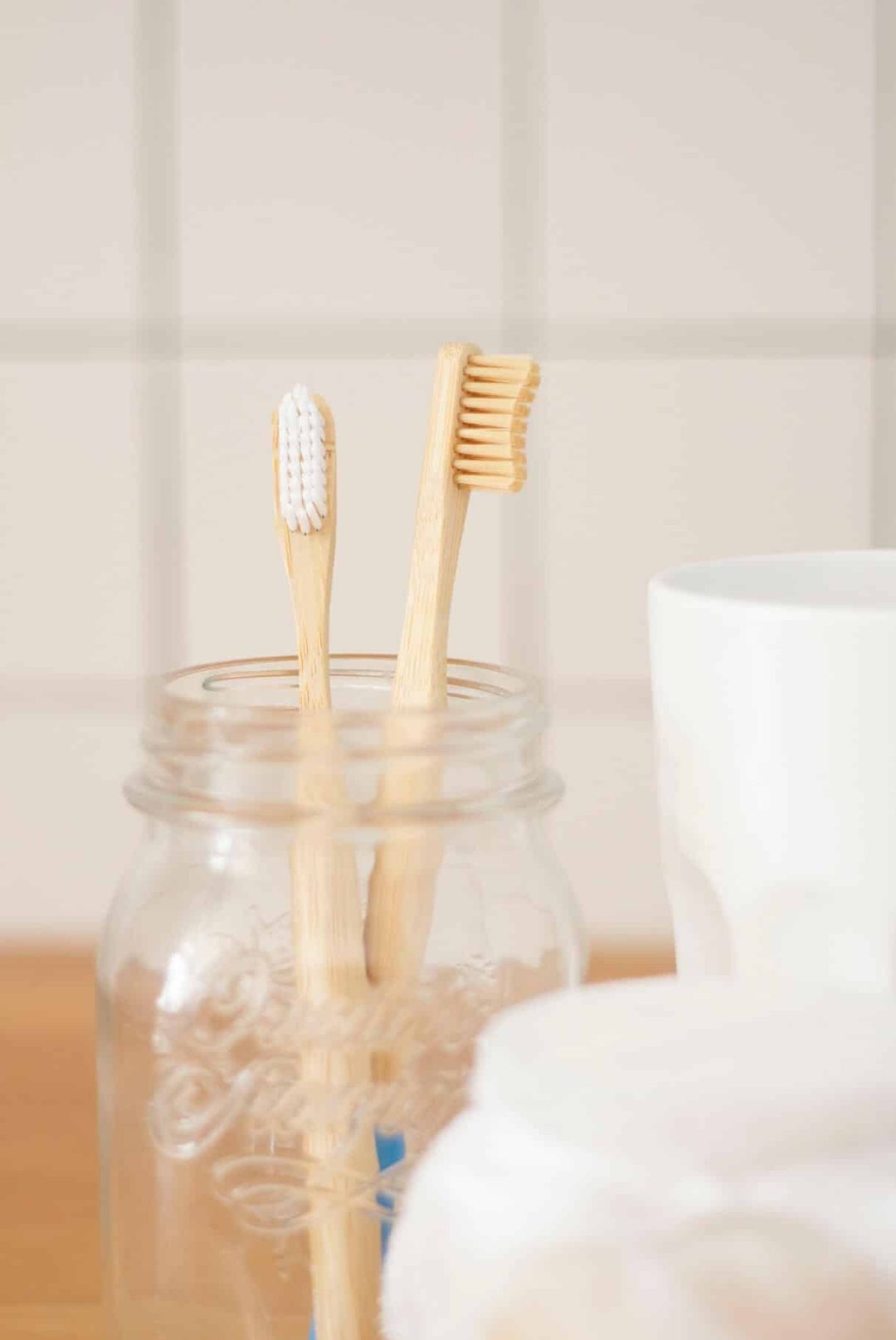
5. toothbrushes made from bamboo: take a stand against microplastics and plastic waste by choosing environmentally friendly toothbrushes made from bamboo. Bamboo toothbrushes with charcoal bristles are not only packaged plastic-free, but can also be disposed of in organic waste.
“
What we do today determines what the world will look like tomorrow.
Marie von Ebner-Eschenbach
6. natural dental floss: Dental care is important! However, conventional dental floss is made of nylon and is problematic because it is often waxed and packaged in plastic. Alternatives such as dental floss made from silk (wax-coated and in glass bottles), vegan dental floss made from castor oil (with plant-based fibers and sustainable packaging), or vegan dental floss made from corn starch (in a pretty refillable glass bottle) offer environmentally friendly alternatives.
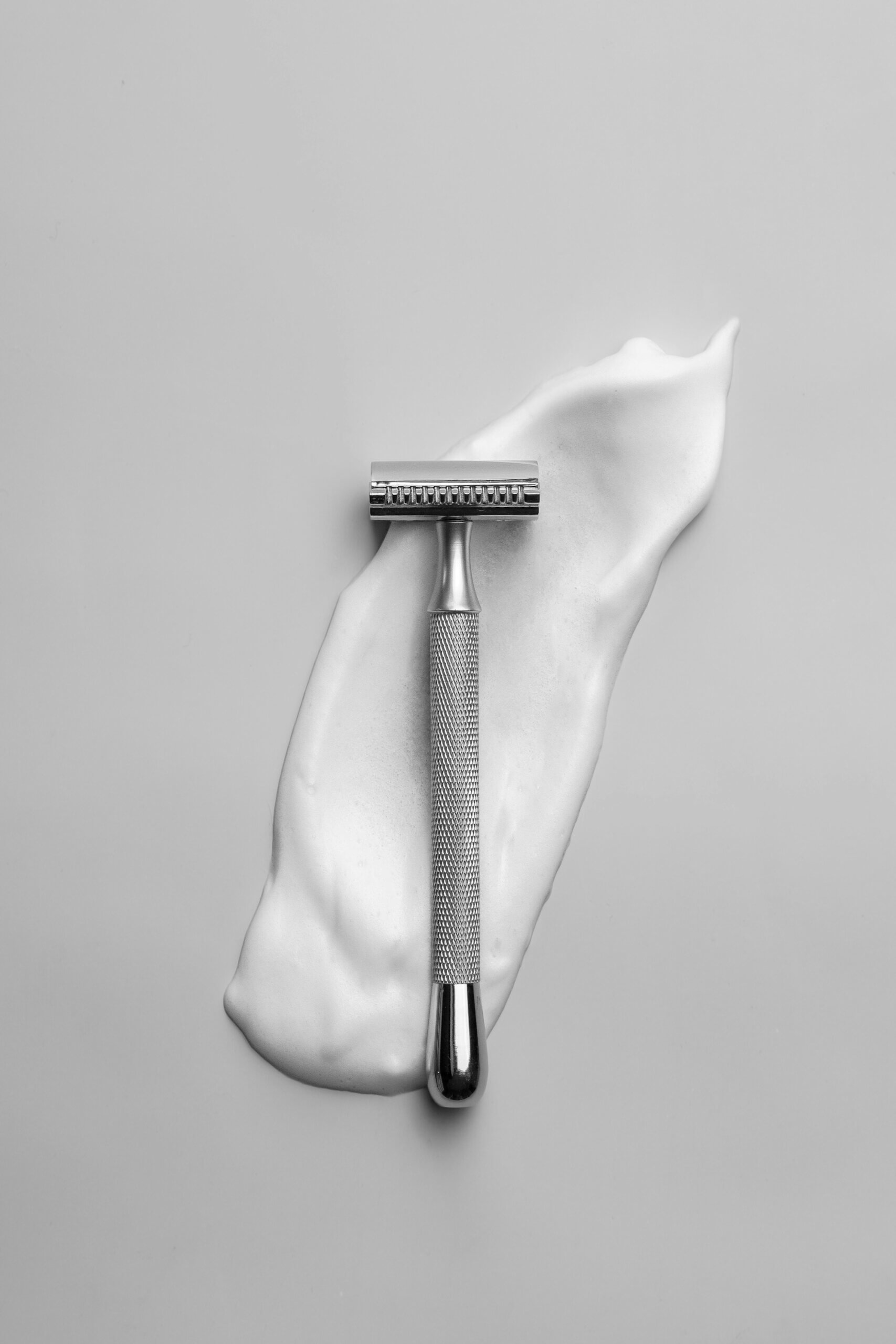
7. plastic-free shaving: Disposable razors in particular cause a lot of plastic waste. A system razor is already a lot more environmentally friendly, but it can also be even more sustainable, namely with a safety razor. Although a safety razor is usually more expensive to buy than a conventional razor, it is much more durable and the blades are also much cheaper.
8. deodorant without plastic: Deodorants are often available in spray cans, which are undoubtedly practical, but also cause a lot of waste. Even roll-on deodorants, although slightly more environmentally friendly, are largely made of plastic. An effective way to reduce plastic in the bathroom is to switch to deodorant creams and solid deodorants. These not only offer a sustainable alternative, but are also more environmentally friendly and help to minimize plastic consumption.
9. plastic-free through the days: hygiene products such as tampons and pads contribute significantly to waste pollution as they are usually made predominantly of plastic. Reusable pads, panty liners and menstrual cups made of silicone offer an environmentally friendly alternative that can be easily cleaned in the washing machine and used for a long time. In addition, sustainable menstrual underwear is also gaining popularity as an environmentally friendly alternative to conventional disposable products.
10. thinking big in the restroom: Toilet paper in shops is often packaged in plastic, and unpackaged stores, which offer a plastic-free alternative, are mainly present in large cities. Although cardboard-wrapped toilet paper is available online, it is more expensive than in retail stores, which puts many people off. A practical solution is to buy toilet paper in larger quantities to reduce plastic waste. The packaging can then even be reused as bin liners. It is important to use recycled paper. If you want to do without toilet paper completely, you can try a toilet hand shower – it’s unusual at first, but is often perceived as a more hygienic alternative. If you don’t care about the price and still want to give it a try, you will find here find what you are looking for.
It is time to actively avoid not only plastic, but also microplastics. Together, we can have a positive impact on the environment and stop the pollution of our oceans. Join in and make your bathroom plastic-free so that our beautiful planet remains a place worth living not only for us, but also for future generations!
Sources:
1 WWF Germany (2023): No sea can swallow this anymore: Our oceans are sinking in plastic waste; (https://www.wwf.de/themen-projekte/plastik/plastikmuell-im-meer )